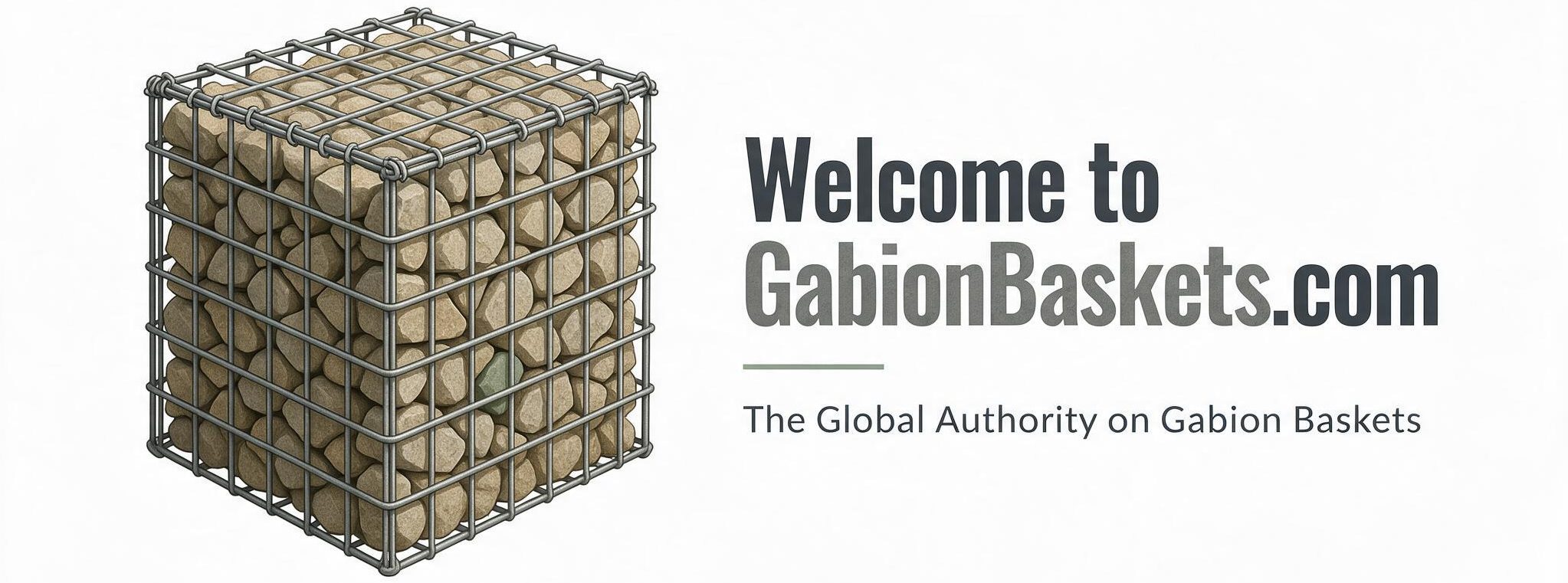
What Are Gabion Baskets?
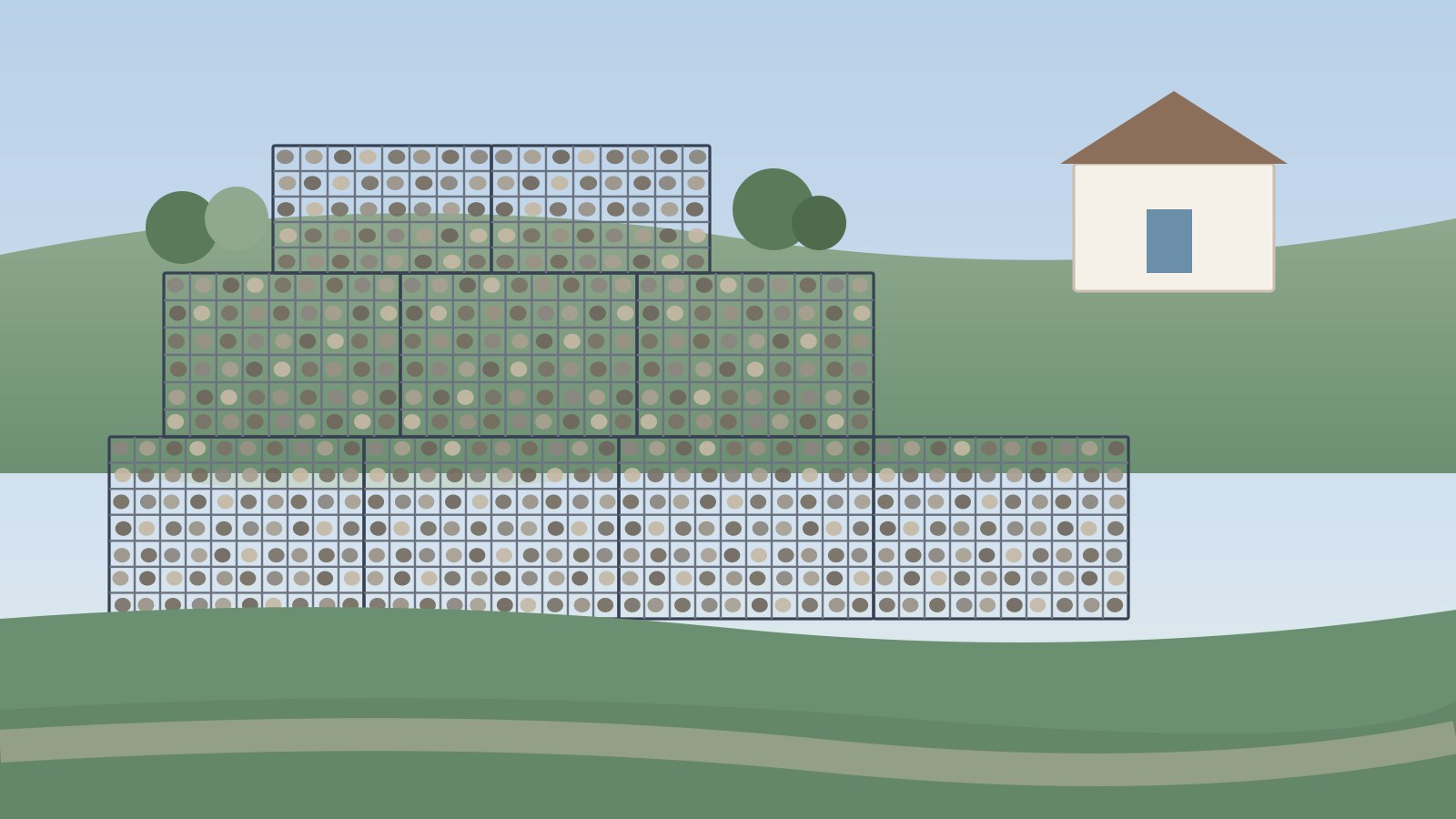
Gabion baskets are rectangular wire mesh containers designed to be filled with stone (or similar hard fill) on site. Once assembled, braced as needed, packed, and closed, they become modular building blocks for landscape walls, planters, seating, grade changes, and many erosion-control structures.
On GabionBaskets.com, we explain gabions in DIY-friendly language so you can shop and plan with clearer expectations — without treating this page as a product catalog or engineered design.
A simple definition
| Term | Plain meaning |
|---|---|
| Gabion | A cage or basket that holds rock; from older engineering practice of stone-filled containers |
| Gabion basket / cage | The empty wire mesh unit (panels or folded mesh) before fill |
| Fill | The stone (or approved rock) placed inside the mesh |
| Diaphragm | An internal mesh divider that creates cells in longer baskets |
| Selvedge | Heavier edge wire on some woven mesh products that reinforces panel edges |
You may also hear gabion mattress — a shallower, wider unit used more often on slopes and channels than as a freestanding wall face. See Gabion mattresses.
How a gabion works (homeowner version)
- Mesh holds the stone — openings are sized so typical fill rock stays inside.
- Stone provides mass and structure — weight and interlocking pieces resist movement.
- Water can drain through — unlike solid concrete, the fill is permeable, which can reduce some hydrostatic pressure behind walls (site design still matters).
- Units connect — baskets are laced, spiral-bound, or clipped together into longer runs or stacked courses per manufacturer guidance.
Gabions are valued for being modular, often flexible enough to tolerate minor settlement better than rigid masonry, and visually “honest” — you see the stone.
What’s in a typical kit or shipment?
Exact contents vary by seller. Commonly you will encounter:
- Mesh panels or a folded basket (welded or woven)
- Fasteners such as spiral binders, lacing wire, and/or C-rings / hog rings
- Stiffeners or crossties for taller cells (to limit bulging of the face)
- Lid panel to close the top after filling
Coatings matter as much as shape: heavily galvanized wire is common; many products add PVC or other polymer coatings for harsher exposure. Details: Mesh and coatings.
Welded vs woven (quick teaser)
- Welded: wires joined at each intersection; often square mesh; popular for tidy architectural and garden looks.
- Woven (double-twisted): hexagonal mesh; tends to be more flexible; widely used in civil and bank protection.
Full comparison: Welded vs woven gabion baskets.
Typical sizes (not a guarantee)
Industry charts and standards-oriented manufacturer data often list baskets around 3 ft (about 0.9 m) wide, with lengths such as 6 ft, 9 ft, or 12 ft (about 1.8 m, 2.7 m, or 3.7 m) and heights commonly on the order of 1 ft, 1.5 ft, or 3 ft (about 0.3 m, 0.45 m, or 0.9 m) — plus metric families such as 1 m × 1 m × 1 m modules in many international catalogs. Tolerances of roughly ±5% on manufactured dimensions are commonly referenced in technical literature.
Treat every number as typical, then confirm the datasheet for the product you buy. Deeper guide: Sizes and spec guide.
What goes inside?
For standard baskets, public construction guidance and manufacturer practice commonly point to hard, durable stone with a predominant size often about 4–8 in (100–200 mm) — large enough that pieces will not pass through the mesh, and durable enough for outdoor exposure. Mattresses often use a somewhat smaller predominant size. Angular rock usually interlocks better than smooth river cobbles for structural faces.
Popular DIY and landscape uses
- Garden walls, terraces, and raised planters
- Outdoor seating bases and fire-feature surrounds (follow fire-safety and local rules)
- Property-line borders and screen walls (check HOA/setbacks)
- Low retaining / grade-change walls on quiet residential sites
For banks, channels, and anything tall or load-bearing, shift from “weekend DIY” to professional design. Start with Retaining walls and DIY vs contractor.
What gabions are not
- A substitute for a stamped retaining-wall design when codes or risk require one
- Maintenance-free forever (coatings and stone quality affect longevity)
- Magically cheaper than every alternative — freight and stone volume add up (Cost factors)
Next steps on GabionBaskets.com
- Choose mesh type: Welded vs woven
- Learn size/mesh/wire ranges: Sizes & specs
- Plan stone and assembly: Fill stone, Install overview
- Skim Common mistakes before you buy
Back to the hub: Homepage.
Educational disclaimer: Content on GabionBaskets.com is for general education only. It is not a site-specific design, engineering stamp, or construction contract. Tall walls, walls supporting structures or traffic, channel work, and other critical applications need a qualified designer or engineer. Always follow local building codes, permits, and the manufacturer’s assembly instructions for the baskets and coatings you buy.