DIY vs Hiring a Contractor for Gabions
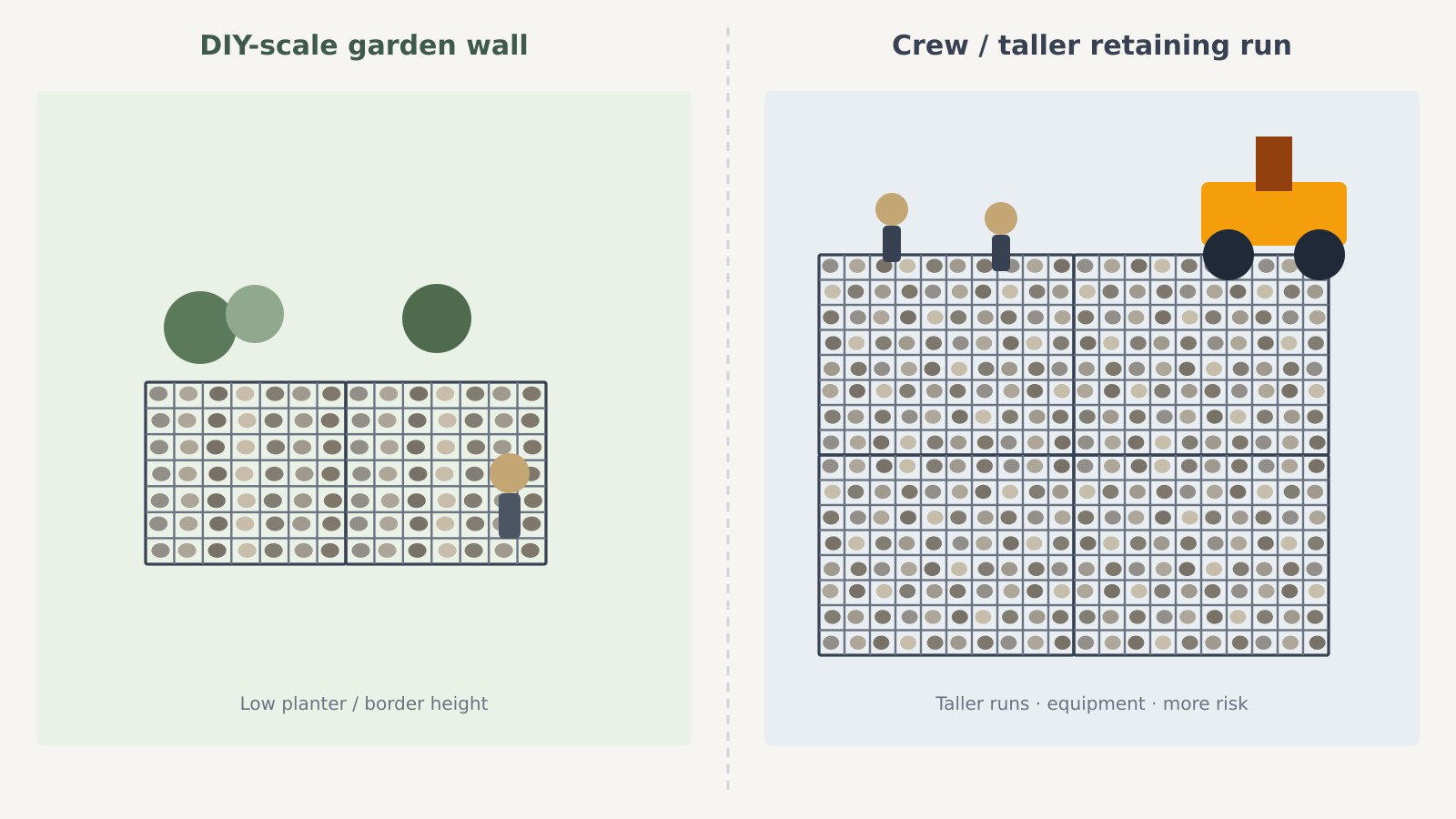
Gabions look modular — and many are weekend-friendly — but modular is not the same as risk-free. GabionBaskets.com helps you decide when a DIY build is reasonable and when height, water, codes, or surcharge make a contractor (and often a designer) the smarter call.
This is a decision framework, not a permission slip. Local building departments set the rules that matter on your lot.
The short answer
| Lean DIY when… | Lean pro when… |
|---|---|
| Low, lightly loaded landscape features | Walls that retain soil supporting structures or traffic |
| Quiet garden grade changes / planters / seating | Height near or above local engineered-wall thresholds |
| Good access, stable soils, simple drainage | Poor soils, seepage, steep slopes, slide history |
| You can follow manufacturer assembly instructions | Channel, riverbank, or permit-heavy water work |
| Failure would mainly mean rework, not danger | Failure could threaten people, buildings, or neighbors |
Depth on wall mechanics: Retaining walls. Water work: Erosion & riverbanks.
DIY-friendly project types (typical)
These are the projects many capable homeowners complete successfully when codes allow:
- Planters, columns, and patio seating bases (Landscape & garden)
- Short garden borders and decorative screen walls
- Terraced landscape steps that do not support a driveway, house, or pool
- Small freestanding features on level pads
DIY success still depends on correct mesh, coating, stone size, bracing, and foundation habits — Install overview, Fill stone, Common mistakes.
Hire-a-pro triggers (treat seriously)
Involve a qualified contractor and, where required, a designer/engineer when any of these apply:
- Structural surcharge — the wall holds up a driveway, parking, building pad, public path, or heavy storage.
- Height / code thresholds — many jurisdictions require engineered design above a stated retained height (thresholds vary; ask your building department). There is no universal DIY-safe height.
- Water and channels — streambanks, culvert outlets, concentrated storm flow, or anything resembling civil armor.
- Difficult soils or groundwater — soft clay, organics, high water table, known movement.
- Property-line / neighbor risk — shared slopes, fences, or drainage that could redirect water onto others.
- Access or scale — stone tonnage, equipment needs, or multi-course runs beyond your crew and tools.
- Permit / HOA / environmental review — if a stamped plan is required, DIY assembly alone does not satisfy it.
What “contractor” can mean
| Role | When you need them |
|---|---|
| Landscape contractor experienced with gabions | Assembly, stone placement, tidy faces on residential walls |
| Civil / earthwork contractor | Larger retaining, drainage, or bank projects |
| Design professional / engineer | Tall or critical walls, surcharge, poor soils, permitted plans |
| Specialty gabion installer | When local landscape crews lack mesh/bracing experience |
Ask for photos of completed gabion work, not only general hardscape. Confirm they will follow manufacturer fastening and bracing details — not “just dump rock in a cage.”
Cost tradeoffs (honest framing)
DIY saves labor line items but not physics:
- You still pay for baskets, coatings, stone, freight, base materials, and tools/rentals — Cost factors
- Mistakes (bulging faces, wrong stone, skipped drainage) can cost more than hiring help once
- Pros bring speed, equipment for heavy stone, and familiarity with inspection expectations
Saving money by skipping design on a critical wall is not a savings strategy.
Skills and time DIY actually needs
Honest self-check:
- Can you excavate and level accurately?
- Can you assemble mesh without leaving open seams?
- Will you install stiffeners/crossties as fills rise?
- Can you hand-dress faces instead of dump-and-run?
- Do you have a plan for tons of stone delivery and placement?
- Are you willing to stop and get help if the dig reveals bad soils or water?
If several answers are “no,” start with a small decorative pilot — or hire for the structural pieces and DIY only the planters.
Hybrid approaches that often work
- Pro designs / stakes the retaining run; you build decorative end planters
- Pro excavates and sets base; you assemble and fill under supervision
- You DIY low terrace courses; a contractor handles the critical lower toe or drainage
- Pro handles bank/mattress work; you DIY upland garden gabions only
Keep documentation: product datasheets, fastener schedules, and photos of bracing before lids close — useful for inspections and future owners.
Decision flowchart (text)
- Is this decorative / low landscape only? → DIY candidates OK if codes allow.
- Does it retain soil that supports anything important? → Pro + design.
- Is water concentrated or is this a bank/channel? → Pro (+ permits).
- Are soils, access, or height uncomfortable? → Pro.
- Still DIY? → Read install, fill, coatings, and mistakes guides; buy correct materials; inspect as you go.
Related guides
- Retaining walls · Install overview
- Cost factors · Common mistakes
- Erosion & riverbanks · FAQ
- Hub: GabionBaskets.com homepage
Questions about our educational guides? See Contact. We do not sell baskets or dispatch crews in v1 — About · Privacy.
Educational disclaimer: Content on GabionBaskets.com is for general education only. It is not a site-specific design, engineering stamp, or construction contract. Tall walls, walls supporting structures or traffic, channel work, and other critical applications need a qualified designer or engineer. Always follow local building codes, permits, and the manufacturer’s assembly instructions for the baskets and coatings you buy.