Gabion Baskets for Landscape and Garden
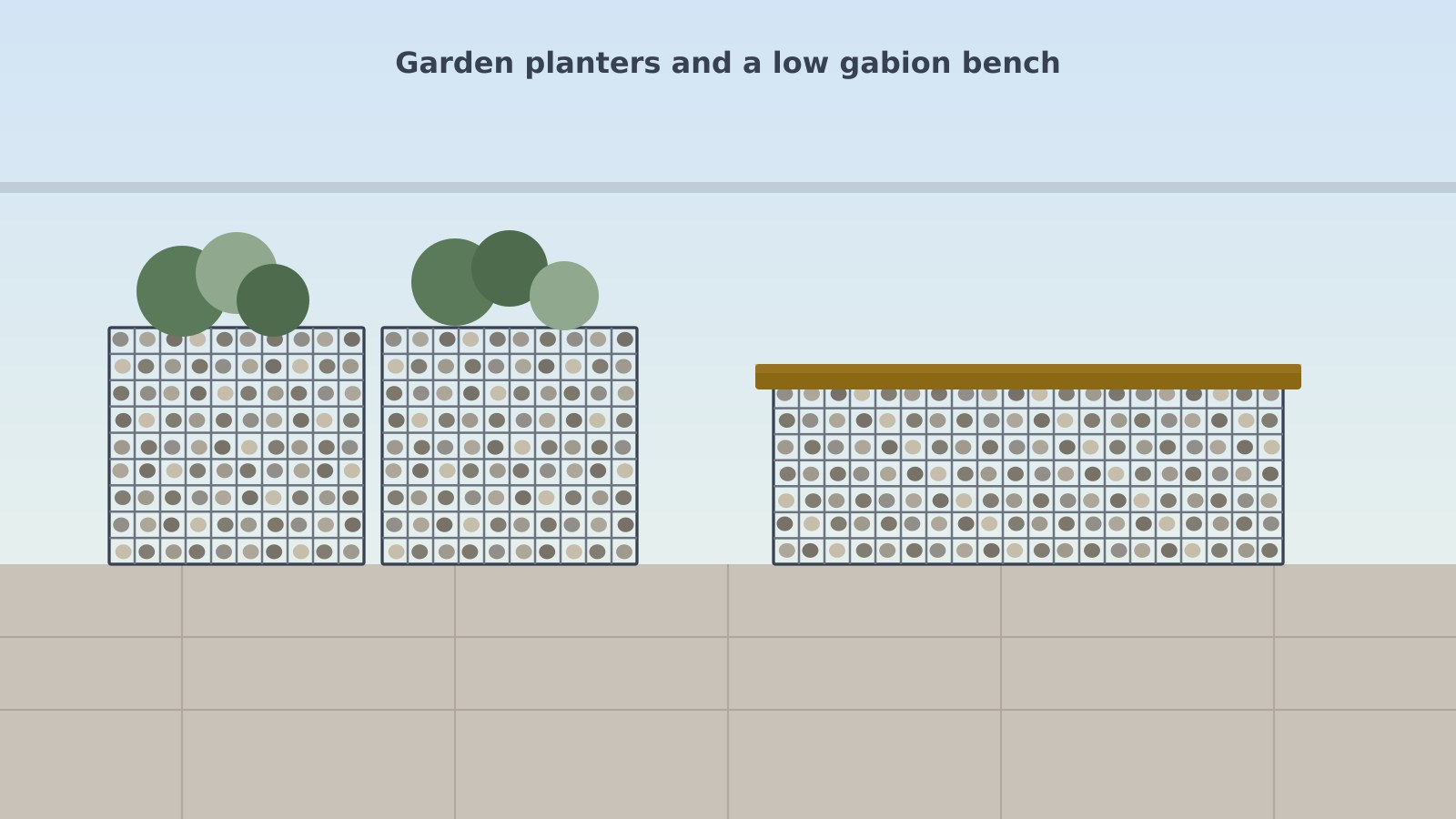
Gabions shine in the yard when you want stone texture without pouring concrete. On GabionBaskets.com, landscape and garden uses mean planters, seating bases, borders, screen walls, fire-feature surrounds (with safety caveats), and low terrace walls — modular projects that many homeowners can tackle at a DIY scale.
This page is about look, layout, and practical choices. For true retaining duty and height limits, read Gabion retaining walls.
Why homeowners use gabions outdoors
- Honest materials — wire + rock reads modern or rustic depending on stone and mesh
- Modular layout — rearrange courses and runs to fit beds, patios, and paths
- Drainage-friendly — water can move through the fill (good for many planted contexts)
- DIY-accessible scale — smaller welded kits and short runs are common weekend projects
They are not maintenance-free forever, and they are not automatically cheaper than every alternative once stone and freight are counted (Cost factors).
Popular garden and landscape applications
| Idea | Typical DIY fit | Watch-outs |
|---|---|---|
| Raised planters / bed walls | High — short modules | Line planting zones if soil fines must stay out of voids; irrigation drip is easier than flood watering the stone mass |
| Outdoor seating bases | High — low height | Cap with wood, stone slab, or outdoor cushion platform; check comfort height |
| Garden borders & edging | High | Match mesh opening to fill; keep mower clearance in mind |
| Privacy / screen walls | Medium | Height + wind + neighbor setbacks; may need pro design as height grows |
| Columns & pillars | Medium | Bracing and filling technique matter for vertical faces |
| Fire-pit / fireplace surrounds | Medium–low DIY risk | Heat, embers, codes, and clearances — follow local fire rules; do not invent “safe distances” from this page |
| Low terrace / grade steps | Medium | Becomes retaining when soil load rises — see retaining guide |
Welded vs woven for garden looks
Most finished patio and courtyard projects lean welded mesh for a tidy square grid that pairs with modern furniture and hardscape lines. Woven hexagonal mesh still works outdoors and suits a softer, more “civil works” aesthetic — or sites where a bit of flexibility is welcome.
→ Decision table: Welded vs woven gabion baskets
Architectural welded products may also be sold as custom panel sizes in mesh-grid increments (for example, multiples of a common 3 in / 75 mm spacing). Availability is brand-specific — Sizes & specs.
Design tips that actually help
Stone is the finish material
Choose fill for color, size consistency, and angularity:
- Angular quarry stone usually locks better and looks intentional on faces
- Rounded river rock can look soft but may shift more and sometimes needs careful packing
- Mix sizes only within what the mesh can retain — predominant 4–8 in (100–200 mm) bands are commonly cited for standard baskets in public construction-style guidance
Hand-place the visible face course if you care about the photo. Details: Gabion fill stone.
Coatings and climate
Garden baskets still live outdoors year-round. Galvanized wire is common; zinc-aluminum and PVC / polymer over metallic coatings are often chosen for wetter, saltier, or longer-life expectations. Learn the tradeoffs: Mesh and coatings.
Scale and proportion
- Keep freestanding decorative walls human-scaled unless designed for more
- Use repeating module lengths (common chart sizes like 6 ft / about 1.8 m runs) so joints look deliberate
- Leave room for planting, lighting, and path clearances
Planters: soil vs stone
A gabion planter is usually a stone-filled cage with a planting pocket or liner zone — not a thin wire pot filled only with potting mix. Keep structural cells packed with rock; dedicate a separate soil volume (liner, insert, or rear pocket) so fines do not migrate into the stone voids unless your product system is designed for that.
Siting, HOA, and neighbor etiquette
- Check setbacks, easements, and HOA design rules before building a screen wall
- Confirm underground utilities before digging foundations or trenches
- Think about how the wall looks from the street and the neighbor’s yard
- Avoid blocking drainage paths or concentrating runoff onto other lots
Assembly mindset for garden projects
Even decorative builds need:
- Level base preparation
- Correct panel fastening
- Stiffeners on taller faces to limit bulge
- Careful filling and lid closure
Educational overview: How to install gabion baskets. Avoid the classics: Common mistakes.
Budgeting garden gabions
Small decorative runs can stay approachable; costs climb when you choose premium colored stone, long freight hauls, or tall screen walls. Factor baskets + stone + delivery + your time (or labor). No fake SKUs here — see Cost factors.
How this differs from a seller catalog
Catalog sites may show project galleries next to quote buttons and house size codes. Useful when you are ready to buy. GabionBaskets.com stays educate-only: ideas, caveats, and links into deeper guides so you can shop any reputable dealer with clearer expectations.
Next steps
- Confirm you need landscape features vs true retaining → Retaining walls
- Pick mesh look → Welded vs woven
- Match size and stone → Sizes & specs, Fill stone
- Plan the build → Install, DIY vs contractor
Back to the hub: Homepage. Soft questions: Contact.
Educational disclaimer: Content on GabionBaskets.com is for general education only. It is not a site-specific design, engineering stamp, or construction contract. Tall walls, walls supporting structures or traffic, channel work, and other critical applications need a qualified designer or engineer. Always follow local building codes, permits, and the manufacturer’s assembly instructions for the baskets and coatings you buy.