Your Guide to Gabion Baskets
If you are comparing options after seeing supplier catalogs elsewhere, start here to learn the vocabulary, then shop with confidence from a manufacturer or dealer that fits your project.
What are gabion baskets?
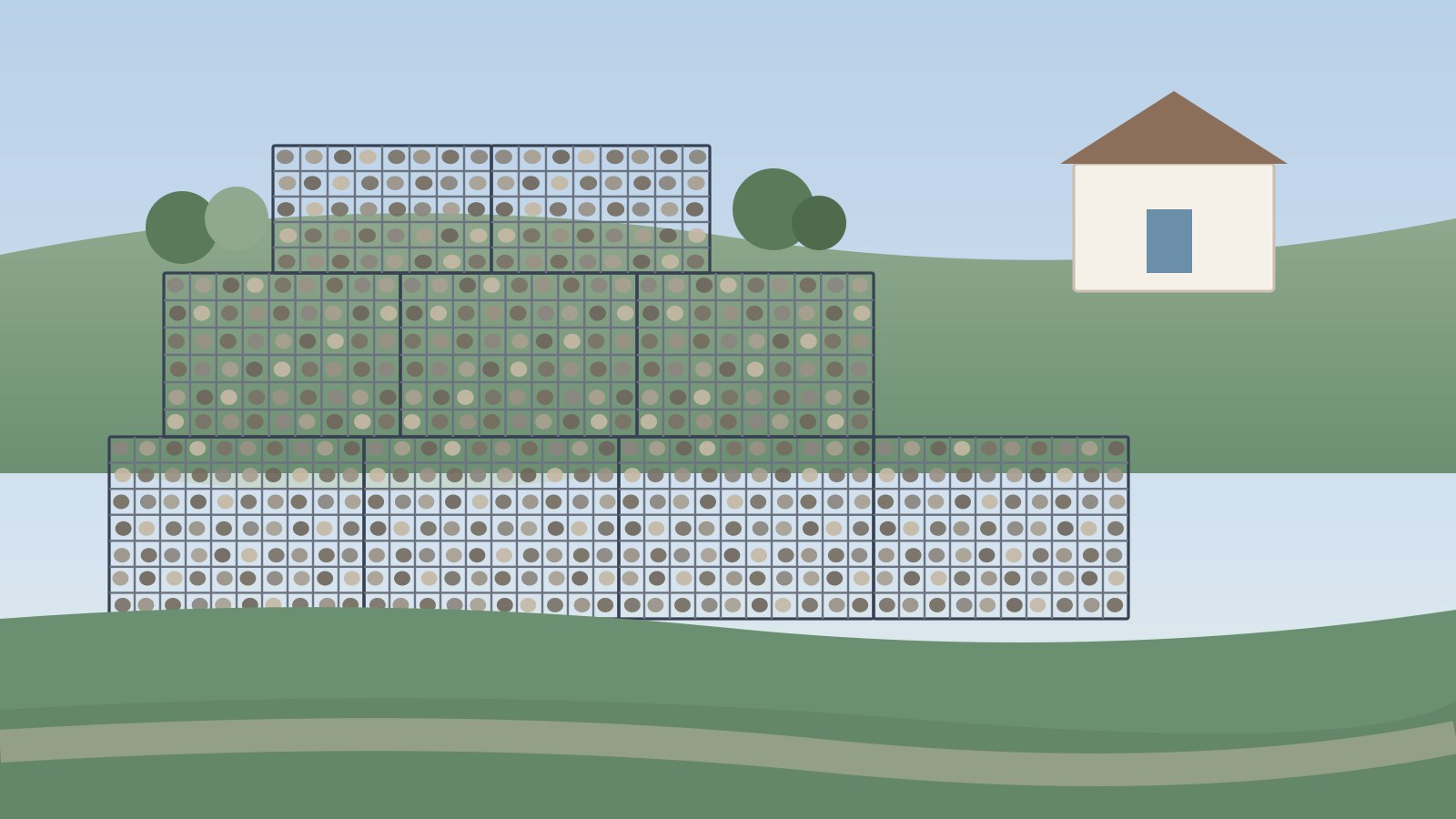
A gabion basket (sometimes called a gabion cage) is a rectangular wire mesh container. On site, you assemble it, brace it as needed, and pack it with rock. Once filled and closed, baskets can be stacked or arranged into permeable structures that drain water while holding soil or creating a finished landscape look.
In plain terms: sturdy mesh + stone fill = a modular building block for outdoor projects.
→ Full explainer: What Are Gabion Baskets?
Common uses homeowners ask about
| Use | Why gabions often appeal | Watch-outs |
|---|---|---|
| Low landscape walls & seating | Attractive stone face, modular layout | Keep heights modest without professional design |
| Garden borders & planters | DIY-friendly scale, mix of stone colors | Choose mesh opening to match fill stone |
| Retaining / grade changes | Permeable; can flex slightly with settlement | Tall or critical walls need an engineer |
| Erosion & drainage edges | Water can pass through the fill | Channels and banks often need permits + pros |
Deeper guides (planned or live): Retaining walls, Landscape & garden, Erosion & riverbanks.
Welded vs woven — the first big choice
Most DIY and landscape shoppers choose between:
- Welded mesh — typically square openings (often about 3 in × 3 in / 75 mm × 75 mm). Holds a crisp shape; popular for decorative and architectural looks.
- Woven (double-twisted) mesh — typically hexagonal openings (often about 3.25 in / 83 mm nominal in common 8×10 mesh). Flexible; long used in civil and erosion work.
Neither is “always better.” It depends on look, site movement, coating, and how you will assemble and fill the baskets.
→ Flagship comparison (with table): Welded vs Woven Gabion Baskets
Sizes and specs without the jargon trap
Manufacturers publish typical basket dimensions (for example, lengths like 6 ft, 9 ft, or 12 ft / about 1.8 m, 2.7 m, or 3.7 m at roughly 3 ft / 0.9 m width and various heights). Mesh openings and wire diameters also follow common industry ranges tied to standards such as ASTM A974 (welded) and ASTM A975 (woven) — but exact offerings vary by brand.
→ Practical ranges and how to read a spec sheet: Gabion Basket Sizes and Spec Guide
Also useful later: Mesh & coatings, Fill stone.
How to use GabionBaskets.com
- Learn the basics — start with What are gabion baskets?.
- Pick a mesh family — Welded vs woven.
- Match size and stone — Sizes & specs and Fill stone.
- Plan the build — How to install, Common mistakes, DIY vs contractor.
- Budget thoughtfully — Cost factors (no fake SKUs).
Quick answers: FAQ.
Why GabionBaskets.com (and how we differ)
Some sites are seller catalogs with stock codes, quote buttons, and regional shipping. That can be useful when you are ready to buy. GabionBaskets.com focuses on education: clearer DIY language, structured comparisons, dual units, and upfront limits (what homeowners can reasonably DIY vs when to hire help).
We do not invent inventory, size-code storefronts, or engineering stamps. When you are ready to purchase, use a reputable manufacturer or dealer and follow their instructions.
Soft next step
Questions about our guides or your project type? See Contact. For who we are and our educate-only stance, see About.
Educational disclaimer: Content on GabionBaskets.com is for general education only. It is not a site-specific design, engineering stamp, or construction contract. Tall walls, walls supporting structures or traffic, channel work, and other critical applications need a qualified designer or engineer. Always follow local building codes, permits, and the manufacturer’s assembly instructions for the baskets and coatings you buy.